Define what the photograph needs to explain
A portfolio photograph represents an object to someone who may never see it in person. Its first responsibility is clarity. Decide whether the image needs to show the complete composition, a surface detail, the work's scale, or an installation relationship. One photograph may not answer all of those questions equally well. A small set of purposeful views is often more useful than a large collection of nearly identical images.
Keep presentation separate from documentation. A dramatic photograph can communicate the atmosphere of a studio, but it may not be the best record of a painting's edges or color. Use a clear main view for the artwork and label supplementary photographs according to what they add. This gives the viewer a dependable starting point before inviting them into a more atmospheric or contextual encounter.
Prepare the space and the object carefully
Choose a stable setup with enough room to work without crowding the artwork. Remove distracting objects from the background and check what will appear around the edges of the frame. Avoid handling or repositioning a delicate work more than necessary. If the object has vulnerable surfaces, unusual attachments, or condition concerns, seek suitable professional guidance rather than improvising a setup that could damage it.
Plan the order of photographs before beginning. Record the main view, any required details, and a scale or installation view where useful. Keep a list beside the work so that you do not discover an important omission after the setup has been dismantled. Preparation reduces repeated handling and lets you concentrate on the qualities the photographs need to communicate.
Keep the camera and artwork aligned
For a straightforward record of a flat work, the relationship between the camera and the surface matters. If they are noticeably misaligned, the rectangle may appear tapered or distorted. Check the position of all four edges rather than judging only the center of the image. Use the camera's available alignment aids where helpful and review the result at a size that makes the boundaries easy to inspect.
Do not hide a poorly aligned capture behind an aggressive crop that removes part of the work. A main portfolio image should make clear where the artwork ends. If you intentionally show a crop, identify it as a detail. Keeping that distinction visible prevents a viewer from mistaking a partial composition for the complete object and allows later images to be compared more accurately.
Look for even, understandable illumination
Examine the surface for glare, strong gradients, unwanted shadows, and color shifts before making the final capture. The aim for a documentary main view is usually to show the work clearly rather than add a lighting effect that competes with it. Reflective, textured, or three-dimensional elements may require a different approach, and a specialist can be useful when the surface is difficult to represent.
Review more than the brightest part of the image. A glare-free central area can coexist with an obscured corner or a reflection that hides an important passage. Make a test photograph and compare it with the object as carefully as your setup allows. If one image cannot describe both the overall composition and a changing surface, provide separate views instead of pretending that a single dramatic photograph is a complete record.
Make color decisions conservatively
Screens, lighting, and camera settings can affect the apparent color of an artwork. Consistent capture conditions and a careful workflow help, but no ordinary digital image guarantees an identical experience on every viewer's display. Avoid adjusting the photograph simply to make the artwork look more vivid or fashionable. The portfolio should help someone understand the object, not create a different version of it.
Keep the original capture and distinguish it from any presentation copy. Record meaningful adjustments in your working process so that you can repeat them consistently or revisit a decision later. If accurate reproduction is critical for printing, publication, or another specialized use, work with someone who can assess the relevant requirements. A file that looks pleasing on one laptop is not by itself proof that it is suitable for every future application.
Include details that answer a question
A detail image should explain something the main view cannot show adequately: a layered edge, a fine line, a raised element, or a particular surface relationship. Choose the crop deliberately and make its location understandable. A close-up that loses all connection with the complete work can be visually interesting while failing to help the viewer assess the object.
Consider including a contextual view when scale or installation matters. Show enough surrounding space to establish the relationship, but keep distractions from becoming the subject. Label the image as an installation or studio view and credit a photographer when appropriate. These captions prevent the different kinds of photographs from competing as if each claimed to be the definitive appearance of the artwork.
Organize files before they become a mystery
Use a consistent file-naming system that connects the image with the artwork and the kind of view. Keep the title, date, medium, dimensions, photographer, and relevant permissions in an accompanying record. A camera's default file name can identify a capture temporarily, but it should not become the only link between an image and the object it represents.
Separate archival originals from copies prepared for the website. The public file can be appropriate to the intended display while the original remains available for future documentation work. Keep backups in a location separate from the only working copy. Organizing a modest collection early is easier than identifying hundreds of anonymous images later, particularly when several photographs show similar works or different stages of the same piece.
Review the portfolio as a viewer would
Open the finished page on a phone and a larger screen. Check whether the full work is visible, whether enlargement helps, and whether captions remain attached to the right images. Look for inconsistent crops, missing dimensions, and details presented without explanation. A visually elegant layout should not make basic information difficult to find.
Finally, ask what a viewer could reasonably conclude from the photographs. Can they distinguish a complete work from a detail, understand its stated materials, and locate the information needed for a more specific question? Good documentation acknowledges what a reproduction can and cannot provide. It makes the artwork easier to encounter at a distance while preserving the distinction between the digital image, the physical object, and the experience of seeing that object in person.
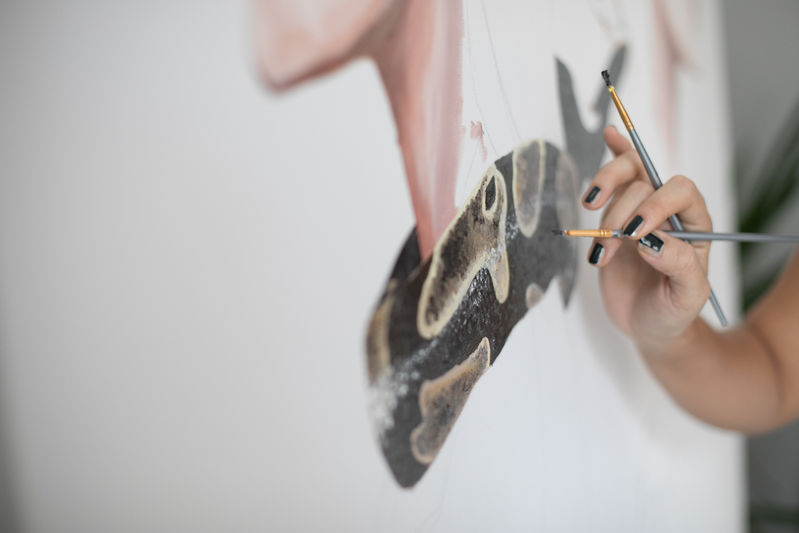
Illustration: Portfolio study 01 from the original art archive. This editorial guide is not presented as a new statement by the artist.